 |
| Russian Caucasian Mountain Dog! |
Monday, July 29, 2013

Friday, July 19, 2013
Francois Langur
 |
Monday, March 04, 2013


Tuesday, December 18, 2012
10 Most Poisonous Frogs on Earth
1) Dendrobates azureus:

As children, many of us kept frogs we had found in jars and vivariums, or just took them home to show to our friends. The frogs on this list are a different ball of wax, not creatures anyone in their right mind would want to play with or even touch - in many cases, in fact, they are deadly poisonous.
2) Golden poison dart frog
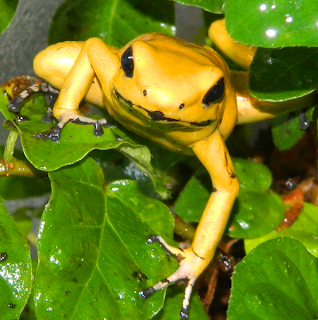 These frogs use their poison solely for self-defense, not to kill prey, and what a good defense against predators it is. Many of them are poison dart frogs known for their use in making arrow poisons. Beautiful but deadly – it's definitely a case of look but don't touch with these suckers!

3. Giant Leaf Frog (Phyllomedusa bicolor)

4. Dyeing Dart Frog (Dendrobates tinctorius)

5. Red-backed Poison Frog (Ranitomeya reticulatus)

6. Strawberry Poison Dart Frog (Oophaga pumilio)


8. Golfodulcean Poison Frog (Phyllobates vittatus)

9. Splash-backed Poison FrogRanitomeya variabilis

10. Phantasmal Poison Frog (Epipedobates tricolor)

Monday, December 10, 2012
The Most Dangerous Creatures of the Sea
Lionfish

Members of the Scorpaenidae fish family, the Lionfish are native to the Indian and Pacific oceans but various species can be found all over the world. Also known as the Turkey Fish or Dragon Fish, it has long poisonous spines that are deadly to many marine creatures. The Lionfish sting is not usually deadly to humans but it will cause severe pain, headaches and vomiting. Lionfish attack people unless provoked, but in case you get stung you should immediately soak the area in hot water and seek medical help.
Stonefish
Members of the Scorpaenidae fish family, the Lionfish are native to the Indian and Pacific oceans but various species can be found all over the world. Also known as the Turkey Fish or Dragon Fish, it has long poisonous spines that are deadly to many marine creatures. The Lionfish sting is not usually deadly to humans but it will cause severe pain, headaches and vomiting. Lionfish attack people unless provoked, but in case you get stung you should immediately soak the area in hot water and seek medical help.


Wednesday, September 12, 2012
THE WORLD'S TALLEST DONKEY

A mule named 'Oklahoma Sam' is today celebrating being crowned the 'Tallest Living Donkey' on the planet.
Measuring 15.3 hands (155.45 cm; 5ft 1in) tall, she dwarfs the common donkey (8 hands high) and her own larger 'Mammoth Jackstock' breed (12 hands high).
The four-year-old record-breaker lives in Watsonville, California, USA, where she shares her one acre of land with a Macaw, duck, goose and four cats.
The other animals, unfazed by Sam's size, enjoy playing with the giant donkey, and when Sam isn't chasing them around the farmland she can usually be found sleeping in an area of shade or nibbling on her bale.
Sam's overall care is handled by 54-year-old Linda Davis, a keen gardener and animal lover.
Linda, who calls Sam her "soul mate", says: "It actually doesn't cost anymore to have a donkey of this size.
"He doesn't eat more. In fact, if I give him more bale he'll just use it to make his bedding more comfortable. He loves his sleep"
Monday, September 03, 2012
Psittacula Bird Species

These brightly-colored Asian and African parakeets are often kept as aviary birds, but they’re making their way into homes as pets with their grace and social nature. Psittacula parakeets earned a reputation as nippy, noisy birds, but their pet bird owners are fiercely loyal to them, pointing out their good qualities, such as their easy-going and independent nature. Fourteen species make up the Psittacula genus, but the plum-headed, ring-necked, Alexandrine and moustached parakeets are the most common species kept as pets in the United States.
Tuesday, August 28, 2012
5 Headed snake in India

I was so surprised to see this picture when a friend of mine sent it to me. This is a snake found in a temple at Karnataka.


Looking like a creature from mythology, multi-headed animals occur in real life as conjoined or parasitic twins. It is not just in mythology that creatures are given to have two or more heads. This condition where an animal or human which has more than one head is termed as polycephaly caused due to developmental abnormality during gene mutation.
Many mythologies like Hindu, Chinese, Greek,etc has references to such a 5 headed snake in their epics. We have so far read about such a snake only in historic stories and epics . I’m sure it will be surprising to most of you as much as myself, to see such a rare species still being alive.
Thursday, August 16, 2012
How to Build an Aviary for African Gray Parrots

African gray parrots are said to be the smartest birds on the planet, possessing the intelligence of a five-year-old child. They are capable of distinguishing between colors, objects and people, and can learn to understand what words mean. A creature with this kind of intelligence should be given an environment in which it can explore and learn. An easy way to do this is to build an aviary.
Instructions:
1)Dig four holes into the earth. They should be about one foot deep. They need to form the points of a large square.
2)Take the steel rods and push each one into one of the holes that were dug. Push them about six inches into the soil so that they are able to stand on their own.
3)Open the concrete mix bag and pour the dry mix into each of the four holes with the rods sticking out of them. Try to bring the cement mix level with the ground. Add water to each of the holes, completely saturating the concrete mix. Let the mix dry in each of the holes.
4)Wrap the wire mesh around the four rods, forming a large square enclosure. Make sure the mesh reaches the very top of the rods. Use the metal ties to secure the mesh in place.
5)Stretch the mesh across the top of the large enclosure. Make sure that all of the gaps are closed off so that the parrots won't be able to escape. Secure the mesh to the top of the enclosure by using metal ties.
6)Drill four holes along each side of the sheet metal and lay it along one end of the enclosure. The metal sheet will provide a shady spot in the aviary when the sun is too hot for the birds to sit directly under. Secure the sheet metal in place by pushing the metal ties through the holes in the sheet metal and attaching it to the mesh of the roof.
Monday, July 09, 2012
World's largest Tortoise found in Amazon sea
Guy's the World's largest Tortise found in Amazon sea its age around 529 /Hieght-59/Weight- 800 Pounds Incredible Naturality Please spread this Info to all over the World.

This is an Image and an message attached to it which is circulating on different social networking sites and most importantly on Facebook,the message claims that the Tortoise shown in the image is the world's largest Tortoise which has been found in Amazon Sea and some other details are being covered in the message about the world's Largest tortoise(as claimed in the message)
And the next thing in the message is "Please spread this into to all over the world"
Yes as usual we will Debug all the details about the message and will try to find what's the truth about the so called Largest tortoise of the world.
So,The first thing is that Is there any truth in the image which is claiming to be the world's largest tortoise,Actually the truth is that the Image is not real,The image has been taken from an Japanese Movie "Gamera the Brave" which was released in 2006.So the First thing which has been cleared here from this is that the so called World;s Largest Tortoise has No Existence in reality.The movie is about a little boy who finds an egg that hatches into a baby turtle and then grown on to become a giant creature.You can see some Images of the so called Largest Tortoise of the world Here.
Although if we consider for a while that the so called Largest tortoise of the world has any existence then as per the message it weighs about just 800 pounds which is illogical it's totally impossible,it the so called Largest tortoise of the world has any existence then it should weigh more then 800 pounds which is itself contradicting.
And yes one more there is also an video regarding this too on youtube claiming that it's the Largest Tortoise But still you can't see that Tortoise Moving in the Video.It's just an Hoax.
The Last thing in the message is "Please spread it"
Obviously after using Social networking sites I can only understand one thing it's being created by someone who was trying to gain some popularity over the social world.
So,In totally the So called Largest tortoise of the world has no existence in reallity,and no one should spread useless message.

This is an Image and an message attached to it which is circulating on different social networking sites and most importantly on Facebook,the message claims that the Tortoise shown in the image is the world's largest Tortoise which has been found in Amazon Sea and some other details are being covered in the message about the world's Largest tortoise(as claimed in the message)
And the next thing in the message is "Please spread this into to all over the world"
Yes as usual we will Debug all the details about the message and will try to find what's the truth about the so called Largest tortoise of the world.
So,The first thing is that Is there any truth in the image which is claiming to be the world's largest tortoise,Actually the truth is that the Image is not real,The image has been taken from an Japanese Movie "Gamera the Brave" which was released in 2006.So the First thing which has been cleared here from this is that the so called World;s Largest Tortoise has No Existence in reality.The movie is about a little boy who finds an egg that hatches into a baby turtle and then grown on to become a giant creature.You can see some Images of the so called Largest Tortoise of the world Here.
Although if we consider for a while that the so called Largest tortoise of the world has any existence then as per the message it weighs about just 800 pounds which is illogical it's totally impossible,it the so called Largest tortoise of the world has any existence then it should weigh more then 800 pounds which is itself contradicting.
And yes one more there is also an video regarding this too on youtube claiming that it's the Largest Tortoise But still you can't see that Tortoise Moving in the Video.It's just an Hoax.
The Last thing in the message is "Please spread it"
Obviously after using Social networking sites I can only understand one thing it's being created by someone who was trying to gain some popularity over the social world.
So,In totally the So called Largest tortoise of the world has no existence in reallity,and no one should spread useless message.
Wednesday, July 04, 2012
Largest snails in the world – Giant African snail
Largest snails in the world
Giant African Snail
Sometimes referred to as the Giant African Land Snail and other times known as the Giant Ghana Snail, this enormous mollusc is the largest land snail in the world.
How big can it get?
The longest recorded specimen was 35 centimetres (14 inches) in length and weighed a full kilogram. Whilst few grow to this size, it is still vastly larger than those snails native to the United Kingdom or those that are served on plates in Paris.
What does it eat?
In short, plants. Any plants. It may enjoy fruit, vegetables, and even cuttlefish, but this titan is known to dine on more than 500 different plants.
How dangerous is it?
These snails are harmless towards humans. They have become a favourite amongst pet collectors also.
How many are left?
With its ability to lay as many as 1,200 eggs per year, it isn’t disappearing anytime soon. In fact, it is considered more of a pest than anything, particularly in places like Florida where it is an invasive species and has potential to throw the ecosystem into a tailspin.
Anything else?
Whilst the Giant African Snail may be the largest on the land, the largest snail in the world lives in the sea. Syrinx Aruanus, sometimes called the Australian Trumpet, can reach almost 1 metre in length and weighs about 18 kilograms.
Giant African Snail
Sometimes referred to as the Giant African Land Snail and other times known as the Giant Ghana Snail, this enormous mollusc is the largest land snail in the world.
How big can it get?
The longest recorded specimen was 35 centimetres (14 inches) in length and weighed a full kilogram. Whilst few grow to this size, it is still vastly larger than those snails native to the United Kingdom or those that are served on plates in Paris.
What does it eat?
In short, plants. Any plants. It may enjoy fruit, vegetables, and even cuttlefish, but this titan is known to dine on more than 500 different plants.
How dangerous is it?
These snails are harmless towards humans. They have become a favourite amongst pet collectors also.
How many are left?
With its ability to lay as many as 1,200 eggs per year, it isn’t disappearing anytime soon. In fact, it is considered more of a pest than anything, particularly in places like Florida where it is an invasive species and has potential to throw the ecosystem into a tailspin.
Anything else?
Whilst the Giant African Snail may be the largest on the land, the largest snail in the world lives in the sea. Syrinx Aruanus, sometimes called the Australian Trumpet, can reach almost 1 metre in length and weighs about 18 kilograms.
Tuesday, July 03, 2012
10 Most Poisonous Spiders on Earth
Yellow Sac Spider

The beautiful Yellow sac spider is one of the least venomous in our list – but is still a seriously poisonous proposition. Yellow sac spiders are likely to make the drag line webs of the type you might get rid of with a broom or vacuum cleaner, but thankfully they rarely get near humans to bite. One of the dangers of their bite is a close connection with MRSA infections, which can be very serious; however the level of toxicity itself is disputed, even though the bite can leave necrotic – or dead tissue – lesions.
Fringed Ornamental Tarantula

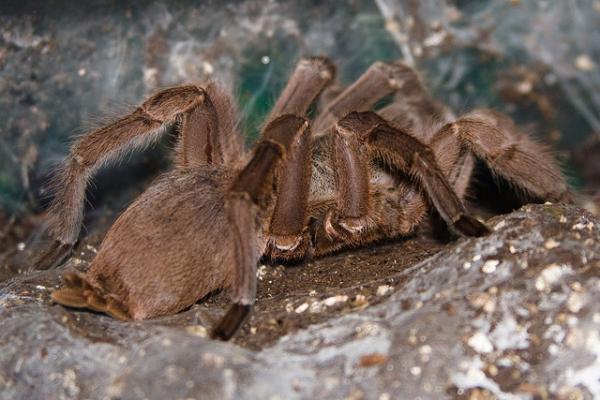
The Fringed ornamental tarantula is quite a venomous spider, with cases of coma reported in the tropics as a result of its bite. Not a lot is known about this spider's venomosity. It is known, however, that almost all tarantulas have large fangs, and even though most are harmless, in this case the bite can cause serious harm, not to mention intense pain!
Chinese Bird Spider
 The Chinese bird spider is a large tarantula with a legspan as large as eight inches. Much research has been done on this large spider's venom as it is an aggressive creature and can bring down small mammals with tiny doses. Found in Southeast Asia, at least one infant death has been recorded. It only takes 0.70mg/kg to cause death in 50 percent of test cases using lab mice. Not a tarantula to mess with.
Mouse Spider

The Mouse spider is found in Australia. The female is all black, while the Red-headed mouse spider male has red jaws (the other species has a red head as well but bright red). Despite their demure-sounding name, these spiders are considered to be as dangerous as the Funnel-web spider (see below); however, there are fewer cases of bites, perhaps because the Mouse spider has been known to often give "dry" bites – that is without releasing its venom. The venom itself is similar to the Funnel-web's, and the same antivenom works to treat the Mouse spider's bite. It has the potential to kill a human being, although so far it seems that a combination of fast emergency treatment and the spider's habit of keeping hold of its venom has resulted in no loss of life. Thank heavens!
Brown and Chilean Recluse Spider

The Brown recluse spider and a sister species, the Chilean recluse, are extremely venomous. However, on the plus side, they have small fangs and can't penetrate clothing easily. They are also, well, recluses, which means there are not as many bites as there might be due to their habit of hiding. Some of the most dangerous symptoms of their bites are necrosis – the dying of tissue at the site of the bite – and the potential for the wound to grow to 10 inches and become gangrenous. About 14 percent of the symptoms are systemic, meaning an infection is caused throughout the body. The Chilean recluse spider is even more toxic, with some systemic infections resulting in kidney failure. One study in Chile showed that 3-4 percent of all bites ended in death. The lethal dose of the Chilean recluse's venom in tests on lab mice in 50% of the victims – its LD-50 – is 1.45mg/kg, so this is definitely a spider to steer clear of.
Redback Spider

Redback spiders are part of the same family as Black widows (see below) and are also very toxic. They are found in Australia and have a prominent red stripe down their back as well as a striped or hourglass figure on their abdomen. Before an antivenom was developed, 14 people had died as a result of Redback bites. Most people suffer less severe symptom, from localized skin infection to others such as swollen lymph nodes, headache, fever, nausea and tremors. More significant, though thankfully rarer, symptoms include seizures, coma and respiratory failure. It's easy to see why these critters have a bad reputation Down Under.
Black Widow Spider

Who among us hasn't heard of the Black widow, a spider that is not only extremely venomous but eats its mate for an after-sex snack! Its bite causes a condition called Latrodectism, which causes severe muscle spasms and sometimes temporary spinal or cerebral paralysis, but rarely death. All species of Black widow spiders display the bright red hourglass on their abdomen, while some also have other red markings on their body – a warning to those that spot them! Before antivenom was available, 5 percent of those bitten would die. Its LD-50 is 0.002 mg/kg. This means it doesn't take much venom to do the job!
Sydney Funnel-Web

Sydney funnel-web spiders are among the most venomous on earth. They have large fangs and unlike some of the other very venomous spiders invariably deliver a full dose of venom instead of dry bites. They are also are more likely to bite than run away and will strike multiple times. Nasty! A compound in the Sydney funnel-web's venom called atracotoxin is very dangerous to all primates – including us! One child died within 15 minutes, but that was before the discovery of an antivenom. The funnel-web's LD-50 is just 0.16mg/kg.
Six-Eyed Sand Spider

The Six-eyed sand spider is another of the most venomous spiders in the world, but luckily it lives in areas where it has little contact with humans and is not aggressive. A cousin of the recluses, it is found in Africa and South Asia, but its venom is many times the strength of the Brown recluse, according to one study. There is no antivenom for it, and apart from localized necrosis, it can also cause disseminated intravascular coagulation (DIC), which results in clots throughout the skin as well as bleeding from the skin and orifices, and can lead to death. That should be warning enough.
Brazilian Wandering Spider

In 2010, the Brazilian wandering spider was named in the Guinness World Records as the most venomous spider in the world. It is also aggressive, obviously making the chance of a bite from it more likely. It has a highly potent neurotoxin that can lead to breathing problems then asphyxiation and death in those bitten. Another effect of its venom is priapism, meaning erections that last a long time – hours to days – and can result in permanent impotence. However, the venom is being studied as a possible fix for erectile dysfunction. The spider only needs to inject 6 ug of its venom to kill a 20-gram mouse, and a full venom load is 1.069 mg. Death in humans has been known to occur even after antivenom has been administered.

The beautiful Yellow sac spider is one of the least venomous in our list – but is still a seriously poisonous proposition. Yellow sac spiders are likely to make the drag line webs of the type you might get rid of with a broom or vacuum cleaner, but thankfully they rarely get near humans to bite. One of the dangers of their bite is a close connection with MRSA infections, which can be very serious; however the level of toxicity itself is disputed, even though the bite can leave necrotic – or dead tissue – lesions.
Fringed Ornamental Tarantula

The Fringed ornamental tarantula is quite a venomous spider, with cases of coma reported in the tropics as a result of its bite. Not a lot is known about this spider's venomosity. It is known, however, that almost all tarantulas have large fangs, and even though most are harmless, in this case the bite can cause serious harm, not to mention intense pain!
Chinese Bird Spider
Mouse Spider

The Mouse spider is found in Australia. The female is all black, while the Red-headed mouse spider male has red jaws (the other species has a red head as well but bright red). Despite their demure-sounding name, these spiders are considered to be as dangerous as the Funnel-web spider (see below); however, there are fewer cases of bites, perhaps because the Mouse spider has been known to often give "dry" bites – that is without releasing its venom. The venom itself is similar to the Funnel-web's, and the same antivenom works to treat the Mouse spider's bite. It has the potential to kill a human being, although so far it seems that a combination of fast emergency treatment and the spider's habit of keeping hold of its venom has resulted in no loss of life. Thank heavens!
Brown and Chilean Recluse Spider

The Brown recluse spider and a sister species, the Chilean recluse, are extremely venomous. However, on the plus side, they have small fangs and can't penetrate clothing easily. They are also, well, recluses, which means there are not as many bites as there might be due to their habit of hiding. Some of the most dangerous symptoms of their bites are necrosis – the dying of tissue at the site of the bite – and the potential for the wound to grow to 10 inches and become gangrenous. About 14 percent of the symptoms are systemic, meaning an infection is caused throughout the body. The Chilean recluse spider is even more toxic, with some systemic infections resulting in kidney failure. One study in Chile showed that 3-4 percent of all bites ended in death. The lethal dose of the Chilean recluse's venom in tests on lab mice in 50% of the victims – its LD-50 – is 1.45mg/kg, so this is definitely a spider to steer clear of.
Redback Spider

Redback spiders are part of the same family as Black widows (see below) and are also very toxic. They are found in Australia and have a prominent red stripe down their back as well as a striped or hourglass figure on their abdomen. Before an antivenom was developed, 14 people had died as a result of Redback bites. Most people suffer less severe symptom, from localized skin infection to others such as swollen lymph nodes, headache, fever, nausea and tremors. More significant, though thankfully rarer, symptoms include seizures, coma and respiratory failure. It's easy to see why these critters have a bad reputation Down Under.
Black Widow Spider

Who among us hasn't heard of the Black widow, a spider that is not only extremely venomous but eats its mate for an after-sex snack! Its bite causes a condition called Latrodectism, which causes severe muscle spasms and sometimes temporary spinal or cerebral paralysis, but rarely death. All species of Black widow spiders display the bright red hourglass on their abdomen, while some also have other red markings on their body – a warning to those that spot them! Before antivenom was available, 5 percent of those bitten would die. Its LD-50 is 0.002 mg/kg. This means it doesn't take much venom to do the job!
Sydney Funnel-Web

Sydney funnel-web spiders are among the most venomous on earth. They have large fangs and unlike some of the other very venomous spiders invariably deliver a full dose of venom instead of dry bites. They are also are more likely to bite than run away and will strike multiple times. Nasty! A compound in the Sydney funnel-web's venom called atracotoxin is very dangerous to all primates – including us! One child died within 15 minutes, but that was before the discovery of an antivenom. The funnel-web's LD-50 is just 0.16mg/kg.
Six-Eyed Sand Spider

The Six-eyed sand spider is another of the most venomous spiders in the world, but luckily it lives in areas where it has little contact with humans and is not aggressive. A cousin of the recluses, it is found in Africa and South Asia, but its venom is many times the strength of the Brown recluse, according to one study. There is no antivenom for it, and apart from localized necrosis, it can also cause disseminated intravascular coagulation (DIC), which results in clots throughout the skin as well as bleeding from the skin and orifices, and can lead to death. That should be warning enough.
Brazilian Wandering Spider

In 2010, the Brazilian wandering spider was named in the Guinness World Records as the most venomous spider in the world. It is also aggressive, obviously making the chance of a bite from it more likely. It has a highly potent neurotoxin that can lead to breathing problems then asphyxiation and death in those bitten. Another effect of its venom is priapism, meaning erections that last a long time – hours to days – and can result in permanent impotence. However, the venom is being studied as a possible fix for erectile dysfunction. The spider only needs to inject 6 ug of its venom to kill a 20-gram mouse, and a full venom load is 1.069 mg. Death in humans has been known to occur even after antivenom has been administered.
Monday, July 02, 2012
Different Types of Monkeys
Types Of Monkeys
Types of monkeys are classified into two major groups, the New World primates (South and Central America) and the Old World primates (Asia and Africa). The major difference, besides living on different continents, is that the New World primates have tails that can grasp and hold things while the Old World primates can't do much with their tails and sometimes have no tail at all. New World primates do not have versatile opposable thumbs like many other primates and most Old World primates do.

Baby Pygmy Marmosets

Squirrel Monkey

Spider Monkey
spider monkey may be the most acrobatic of all the monkeys, looping and swinging very long distances.

Tufted Capuchins

White-faced Saki Monkey

Golden Lion Tamarin

Golden Lion Tamarin Close-up

Emperor Tamarin

Owl or Night Monkey

Owl or Night Monkey Family
The owl monkeys are rain forest monkeys that have a bit of an owlish face that always seems to be smiling. They have many different vocalizations,up to 50 or more, including a piercing alarm shriek. They are night eaters, usually in pairs, they go browsing and foraging, eating fruit, leaves, and insects in the dark forest. In the daytime they sleep together in small family groups within hallowed-out trees.
Types of monkeys are classified into two major groups, the New World primates (South and Central America) and the Old World primates (Asia and Africa). The major difference, besides living on different continents, is that the New World primates have tails that can grasp and hold things while the Old World primates can't do much with their tails and sometimes have no tail at all. New World primates do not have versatile opposable thumbs like many other primates and most Old World primates do.
New World Monkeys
Baby Pygmy Marmosets
Squirrel Monkey
Spider Monkey
spider monkey may be the most acrobatic of all the monkeys, looping and swinging very long distances.
Tufted Capuchins
White-faced Saki Monkey
Golden Lion Tamarin
Golden Lion Tamarin Close-up
Emperor Tamarin
Owl or Night Monkey
Owl or Night Monkey Family
The owl monkeys are rain forest monkeys that have a bit of an owlish face that always seems to be smiling. They have many different vocalizations,up to 50 or more, including a piercing alarm shriek. They are night eaters, usually in pairs, they go browsing and foraging, eating fruit, leaves, and insects in the dark forest. In the daytime they sleep together in small family groups within hallowed-out trees.
Subscribe to:
Posts (Atom)